Why Does Congregational Singing Matter? A Biblical Perspective
Explore why Christians sing together, how Scripture connects music with memory and mutual encouragement, and practical ways churches can make congregational worship more welcoming.

Why Christians sing together
A congregation’s singing can be one of the most memorable parts of worship, not because every voice is polished, but because people share the work of praise. Christians sing when they feel joyful, when they are grieving, and sometimes when they need others to carry a melody for them. The practice is both expressive and communal: one person offers a voice, and the room becomes a chorus made of different ages, abilities, and experiences.
The New Testament connects song with teaching, gratitude, and encouragement. Colossians 3 describes believers singing psalms, hymns, and spiritual songs with thankfulness to God. The passage places music within a life shaped by compassion, humility, patience, forgiveness, and love. Singing is not an isolated performance that substitutes for those practices. It can help a community remember words of faith and speak them to one another.
Imagine an illustrative worship service where a grieving person cannot sing the first verse. A familiar refrain arrives later, and the people around them continue without demanding that they explain their silence. The room carries the song together. This is an illustrative scene, not a personal testimony from the author. It reflects one reason shared singing can matter: participation does not always look or sound the same for everyone.
Songs help a community remember
Music can attach language to memory. A hymn or chorus may return to someone during a hospital visit, a long drive, or a season when reading feels difficult. The words we sing can teach biblical themes, retell the story of Christ, and give the congregation a common vocabulary for prayer. That makes theological care important. A melody may be beautiful, but the words should also be clear, truthful, and appropriate for the people who will sing them.
A worship leader can ask: What does this song say about God? Does it fit the Scripture and theme for the gathering? Is the language understandable to a visitor? Does it leave room for the whole congregation, or is it written mainly for a soloist? These questions are not meant to drain creativity. They help creative choices serve the congregation rather than distract from it.
Singing is participation, not a show
Churches often have musicians and vocalists who prepare carefully, and their skill can serve the room well. Still, the purpose of congregational music is not to create an audience that watches experts. Arrangements, volume, tempo, key, and repetition all influence whether people feel able to join. A song can be technically impressive yet difficult for the room to sing. Another may be simple enough for many voices to enter confidently.
Accessibility is part of hospitality. Some people process unfamiliar lyrics slowly. Some have hearing differences, mobility limitations, or sensory needs. Some are new to the language or tradition. A projected lyric, spoken introduction, printed order, or quieter musical texture may help. Leaders can offer more than one way to participate: singing, listening, prayer, or silence. Not every person will respond in the same way, and belonging should not depend on being visibly enthusiastic.
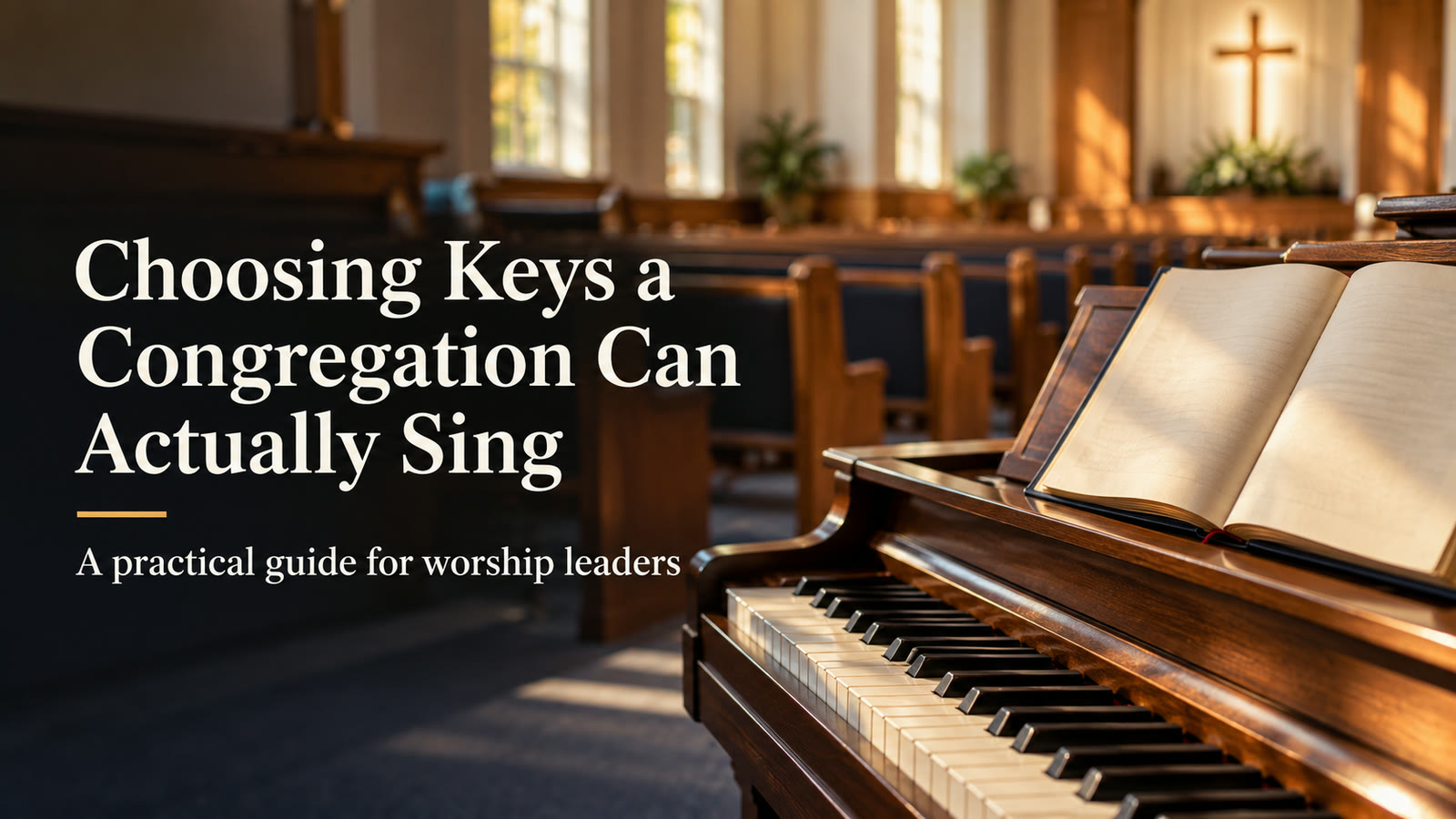
Our guide Choosing Keys a Congregation Can Actually Sing discusses a concrete musical choice that affects participation. Thoughtful keys matter because songs should fit the range of ordinary voices, not only the range of the person leading. Small decisions like that communicate whether the congregation is invited to sing or expected merely to keep up.
Choosing songs with care
A healthy song set can balance familiar music with new work. Familiar songs help people participate without needing to learn everything in the moment. New songs can offer fresh language or connect a community with wider expressions of Christian worship. Introducing a new piece gradually—perhaps teaching a refrain first—gives listeners time to learn. Repeating a song too often can make it feel mechanical, while introducing too many unfamiliar songs can leave the room watching rather than singing.
Consider the emotional shape of the service. A gathering may include lament, confession, thanksgiving, and hope rather than moving only toward celebration. The Psalms themselves contain this range. Careful song planning allows worship to reflect the full life of faith, including sorrow and waiting. For a related reflection on biblical lament, read What Is Lament in the Bible?.
When you do not want to sing
There are many reasons a person may remain quiet: grief, illness, exhaustion, anxiety, disagreement with the words, or simply a preference to listen. Silence does not automatically reveal what someone believes. Pastors and leaders should avoid monitoring people’s worship as if vocal participation were a test of faith. A welcoming community offers invitations without coercion.
If a lyric troubles you, it may be worth asking what the song means or talking with a trusted leader. Thoughtful questions can help a church choose words more carefully. When someone is grieving, being given space to listen may be more pastoral than being urged to sing. For more on prayer when language is difficult, see How to Pray When You Don’t Know What to Say.
A conclusion for churches and worshipers
Congregational singing matters because it lets a community remember, pray, teach, lament, and encourage one another with shared words. It is not a measure of anyone’s spiritual sincerity, and it is not only a musical product to perfect. The strongest worship often makes room for many kinds of voices, including the voice that is quiet today.
Churches can begin by listening to the people in the room: choose singable keys, explain unfamiliar songs, balance new and familiar music, and make participation optional rather than pressured. Worshipers can bring their whole selves, whether that means singing boldly, humming softly, or listening. Together, these small practices remind us that worship is something we offer as a community—not a performance we consume from a distance.